
Regular Fellow on Campus
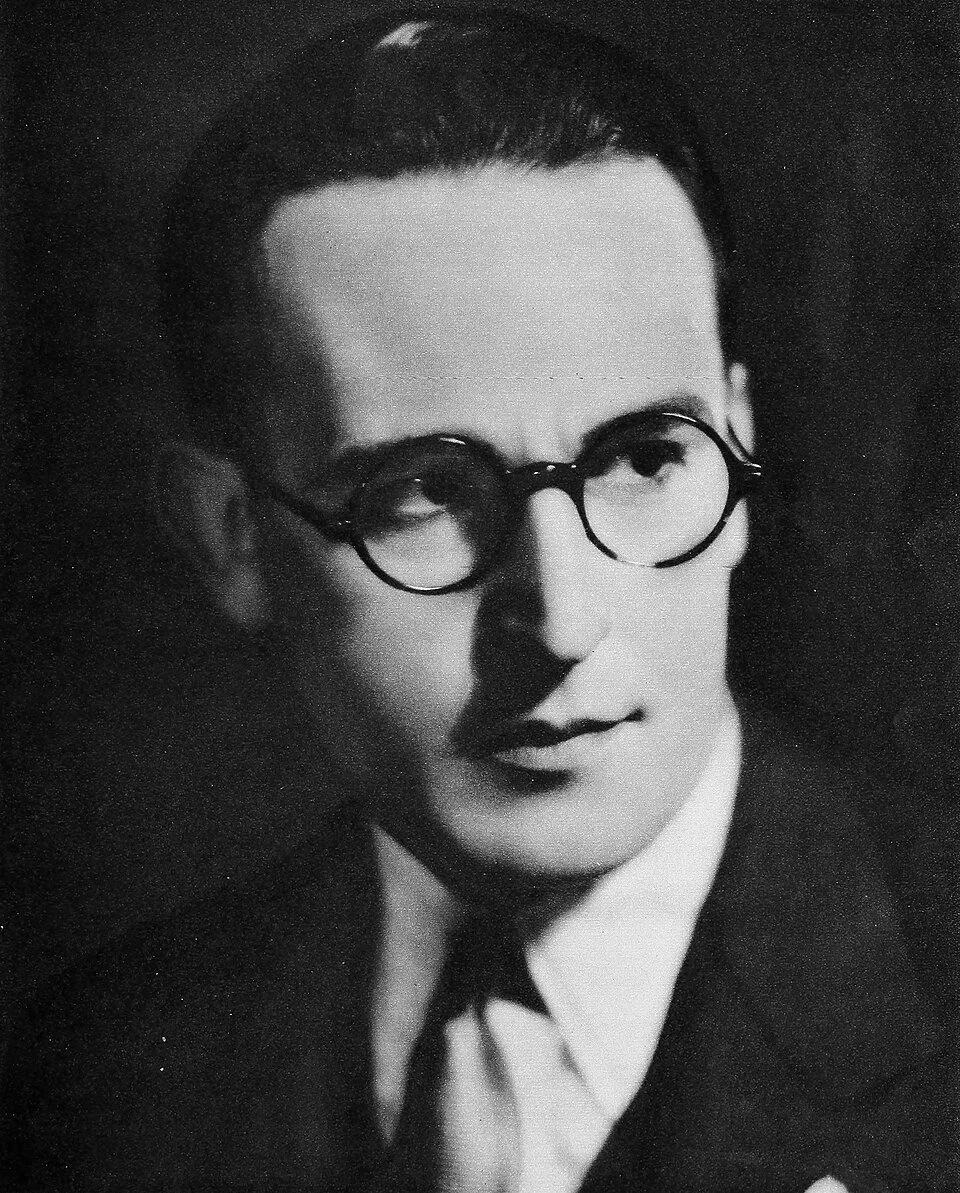
Harold Lloyd pictured in Modern Screen, October 1932
By Kelsey Ronan
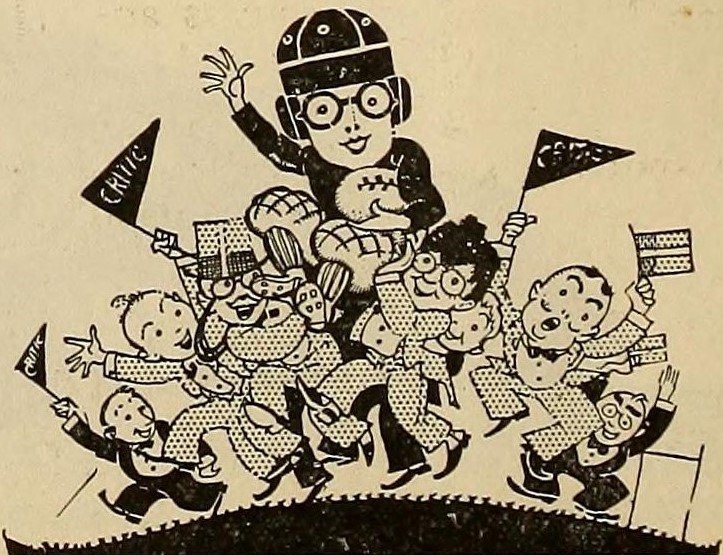
Bright-eyed Harold Lamb steps off the train at Tate University with $485 that he saved up selling washing machines. He’s been dreaming about this moment. Just yesterday he went to see The College Hero at the movies six times. He’s dressed in the varsity sweater and striped beanie of his silver screen idol. He’s practiced the jaunty little dance the hero does whenever he meets someone new, repeating his catchphrase, “I'm just a regular fellow—step right up and call me Speedy.” In Harold Lloyd’s The Freshman (1925), the fantasy of college is about self-invention and social prestige: becoming the big man on campus you see in the movies.
According to Harold Lloyd, he’d toyed with the idea of a college movie since 1915, when he was making Keystone two-reelers with Hal Roach. Whatever kept the idea on the backburner for a decade, Lloyd’s timing was impeccable: by 1925, Lloyd was riding high on the success of Safety Last! and his bespectacled character, The Boy, or the Glass Character, and college was all the rage.
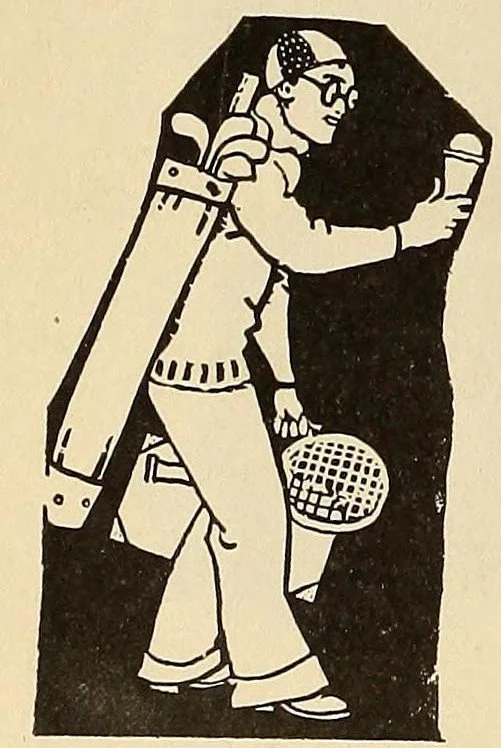
As film critic Dana Stevens contextualizes in Camera Man, “The post-World War I economic boom and a soaring stock market had created enough surplus wealth for college to start to seem like an achievable rite of passage even for families that had never considered it before.” Enrollment skyrocketed, reaching one million students by 1930.
With this broader accessibility, in the popular imagination college was a place of wealth, leisure, and hobnobbing. F. Scott Fitzgerald debuted with This Side of Paradise, about a Princeton undergrad (the novel refers to Princeton as “the pleasantest country club in America.”) Campus fashion was trendy, including knee-length tennis skirts and ankle-grazing racoon fur coats popularized by Ivy League students watching football in Eastern Seaboard winter. The ukulele was a necessity; you could use it to strum hits like 1928’s “Doin’ the Raccoon,” which includes lyrics like “Rough guys, tough guys, men of dignity,/ Join the raccoon coat fraternity soon.” Aided by growing media coverage and the construction of concrete stadiums like the Big House, college football became a national obsession (and until the 1950s was more popular than the NFL). Indeed, The Freshman introduces the fictional Tate University as “a large football stadium with a college attached.”
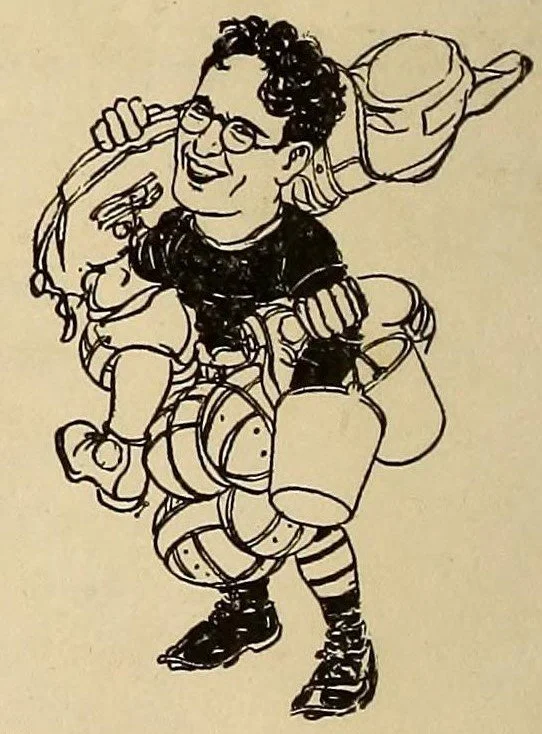
Back on campus, poor freshman Harold blunders through the social strata. His peers mock his earnest jig and try-hard nickname. The football coach relegates him to water boy after using him as a tackling dummy. He walks into the Fall Frolic wearing an unfinished tuxedo, pursued by his hapless tailor. He burns through his washing machine money trying to buy everyone ice cream. Undeterred and naive, Harold bounces back from each little heartbreak.
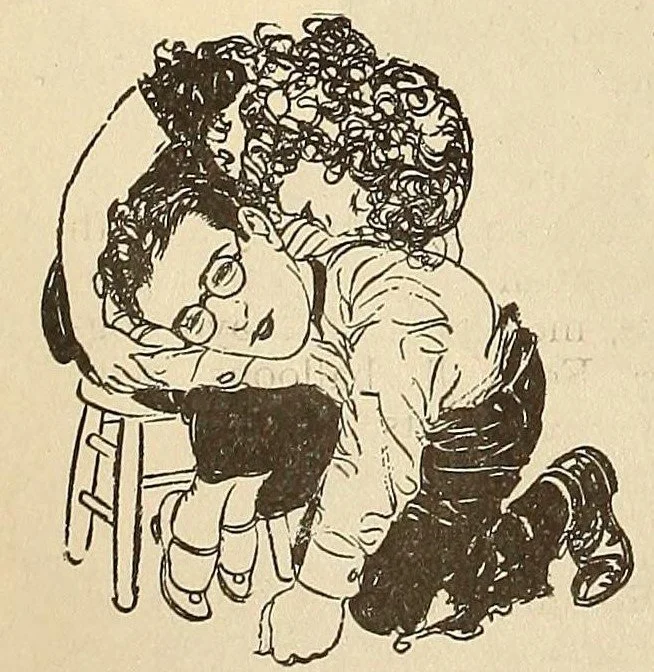
The only one who truly sees Harold is Peggy (played by Jobyna Ralston, Lloyd’s frequent leading lady), a sweet girl who works the coatcheck and likes crossword puzzles. “Harold, you haven’t been true to yourself,” she tells him as he weeps on her lap. “You’ve been pretending to be what you thought they wanted you to be.” And the audience is with her. These guys are snobs, Harold. The movies lied to you.
But The Boy always wins. At the big game, the grand finale, Harold is finally called off the bench, and it’s the gridiron equivalent of scaling a skyscraper and dangling from a clock. Filmed during halftime of a real Berkeley-Stanford game, Harold is exactly where he’d dreamed, in the full rah-rah of 60,000 fans, pigskin inexplicably in hand. The film doesn’t end with a touchdown, though, but with a sweeter, quieter moment I won’t spoil.
For all the spectacle, this final note is the enduring charm of Harold Lloyd’s comedy. For the pioneering comedians of the silent era, comedy sits at the intersection of slapstick silliness and brutality. Charlie Chaplin’s Little Tramp is always scrambling out from under the boot of capitalism and the truncheons of the police; Buster Keaton’s stone-face is often a bewildered underdog saved by his acrobatics. The character Harold Lloyd referred to as his Glass Character or The Boy, however, is a go-getter in a world that isn’t brutal, just a little mean-spirited. The Boy believes in the world’s intrinsic good and the inevitability of his success. Half the time he’s too pure of heart, blinkered by his naivete, to notice that people are pointing and laughing at him.
Though some critics grumbled that The Freshman wasn’t the technical marvel of Safety Last (Variety noted, “Lloyd as a freshman at college has been over-boobed, made the boobiest sort of a booby boob, and in that they overdid it”), the movie was a box office hit and the biggest success of Lloyd’s silent career. It was one of the first in a wave of college movies in which education is almost beside the point. The Plastic Age (1925), about a more gifted freshman football player and his love life, made Clara Bow a star (and features an uncredited Clark Gable). College (1927) follows Buster Keaton through efforts to win a girl by showing her he’s not just a brain but a hero of baseball, track and field, and rowing (Keaton wears a raccoon coat on the promotional poster). Brown of Harvard (1926) introduced John Wayne to the world as a Yale football player. It laid the foundation of a genre. The actors playing the undergrads are well past their pimpled late teens (Lloyd was 31 when he made The Freshman), the games and the parties are everything, and no one seems to go to class. Campus is a pageant where you perform the person you imagined college would make you. That fantasy has proved timeless: consider Harold Lloyd the bespectacled great-grandfather of National Lampoon’s Animal House and Revenge of the Nerds.
I found it curiously reassuring, watching a college freshman arrive on campus in 1925 without the slightest interest in learning anything. I’m an English professor, and like many of my colleagues, I worry that we’re losing our desire to learn, hurtling toward the post-literate AI apocalypse. But in this 101-year-old college comedy, Harold Lloyd isn’t pulling an all-nighter at the library or pushing his horn-rimmed glasses up his nose as he wrangles with Paradise Lost. There’s a century-old tradition of arriving on campus with a hazy idea of academics but a conviction that you can become someone impressive– someone who isn’t selling washing machines and practicing football cheers in the mirror. The Boy goes to college hoping to become the big man on campus. He discovers instead that he’s the regular fellow he’d claimed to be the whole time.