Hollywood Creates a Sheik and Americans Eat it Up
by Matt Jaber Stiffler, PhD
Director, Center for Arab Narratives
The 1921 silent film, The Sheik, starring heartthrob Rudolph Valetino, had a major impact on how Hollywood would depict Arab lands and Middle Eastern peoples for much of the 20th century. The film helped usher in a whole genre of “Sheik” related films, including the reprisal of Valentino’s role in 1926’s Son of the Sheik. The 1921 film was also a product of its time. Americans were fascinated with an imagined “exotic Arabian” past.
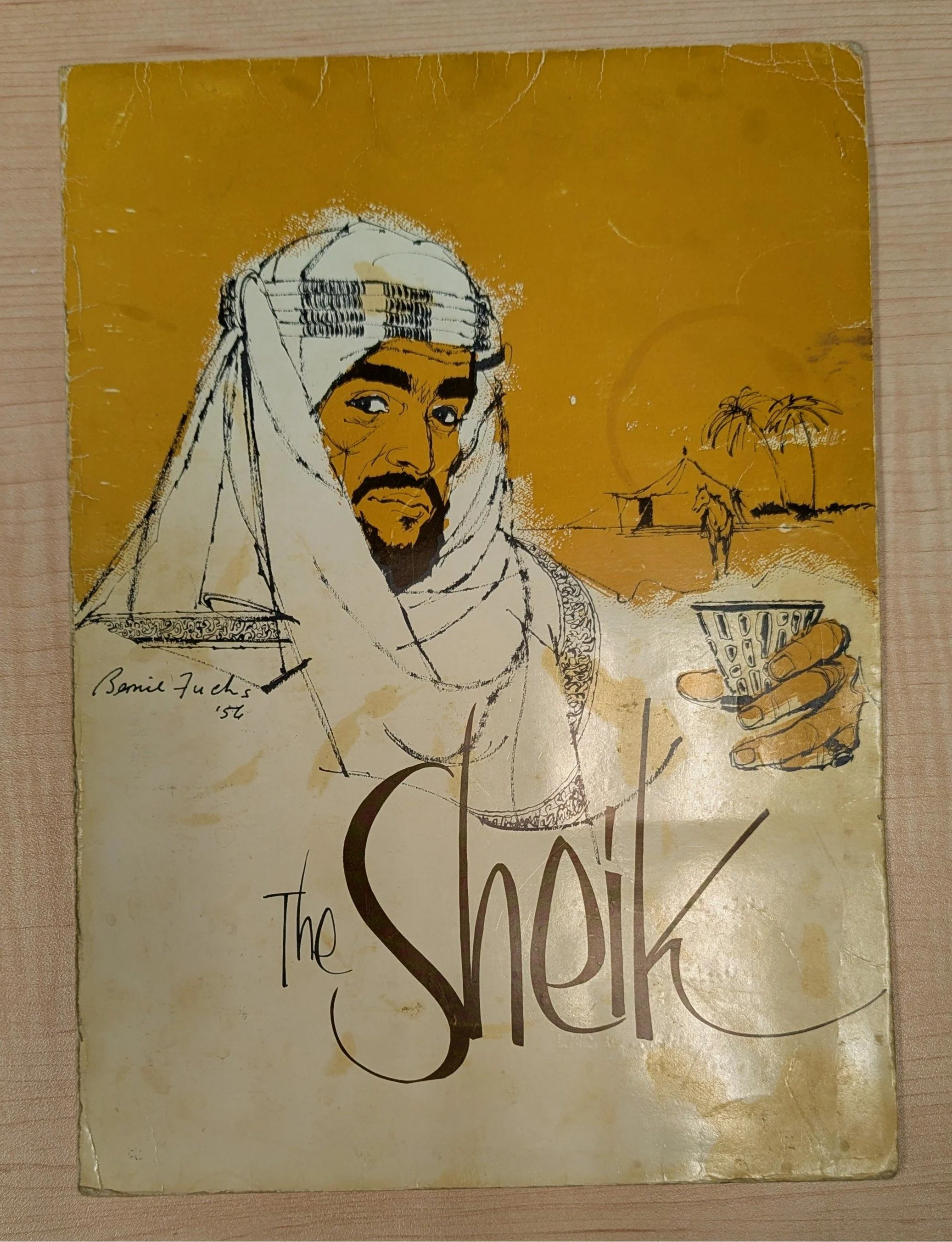
Menu circa 1960 from The Sheik restaurant at 316 East Lafayette in Detroit, Michigan. Courtesy of the Arab American National Museum
Most Americans in the early 20th century only knew about Arabs and the Middle East in two contexts: the Holy Land and the various interpretations of the Arabian Nights (think Sinbad, Ali Baba, and Aladdin). The United States was not yet militarily or economically involved in Arab lands (the discovery of vast oil reserves in the Middle East wouldn’t come until later in the 1920s). Throughout the country, there were lantern slide lectures, romance novels, children’s illustrated volumes, plays, and other popular culture media that brought “ancient Arabia” into the minds of Americans. There were also stereographs that brought the present-day Arab lands and peoples into the homes of Americans and many tours and pilgrimages that brought Americans to the contemporary Holy Land.
As the Arab and Middle Eastern community in the United States started to grow in number (by the start of WW1 in 1914 there were about 10,000 Arabic speaking immigrants arriving in the U.S. annually), many of the immigrants and their children were aware that they were seen as exotic foreigners and, in some extreme cases, were labeled as “parasites” by representatives in Congress and other federal agencies that were pushing to severely limit immigration in the first decades of the twentieth century. In response, many in the Arab American community pushed to quickly assimilate to American culture—as most immigrants did in the “melting pot” era.
But the public fascination with ancient “Arabia” also offered an opportunity for Arab American entrepreneurs to shine.
Elias and Joseph Kirdahy opened a restaurant on Washington Street in New York City’s “Syrian Colony” in about 1913. The Kirdahy brothers, Christian immigrants from Greater Syria, named their restaurant simply Kirdahy Bros. Oriental Restaurant. It survived on Washington Street for decades, nestled among dozens of other Arab American owned cafes, grocery stores, linen shops, and dry goods stores. Sometime in the mid-1920s, the Kirdahy brothers changed the name of their restaurant to The Sheik, after the 1921 Rudolph Valentino film. According to legend, the Kirdahy brothers donned the Sheik name at the suggestion of Hollywood star John Barrymore, who frequented the establishment.
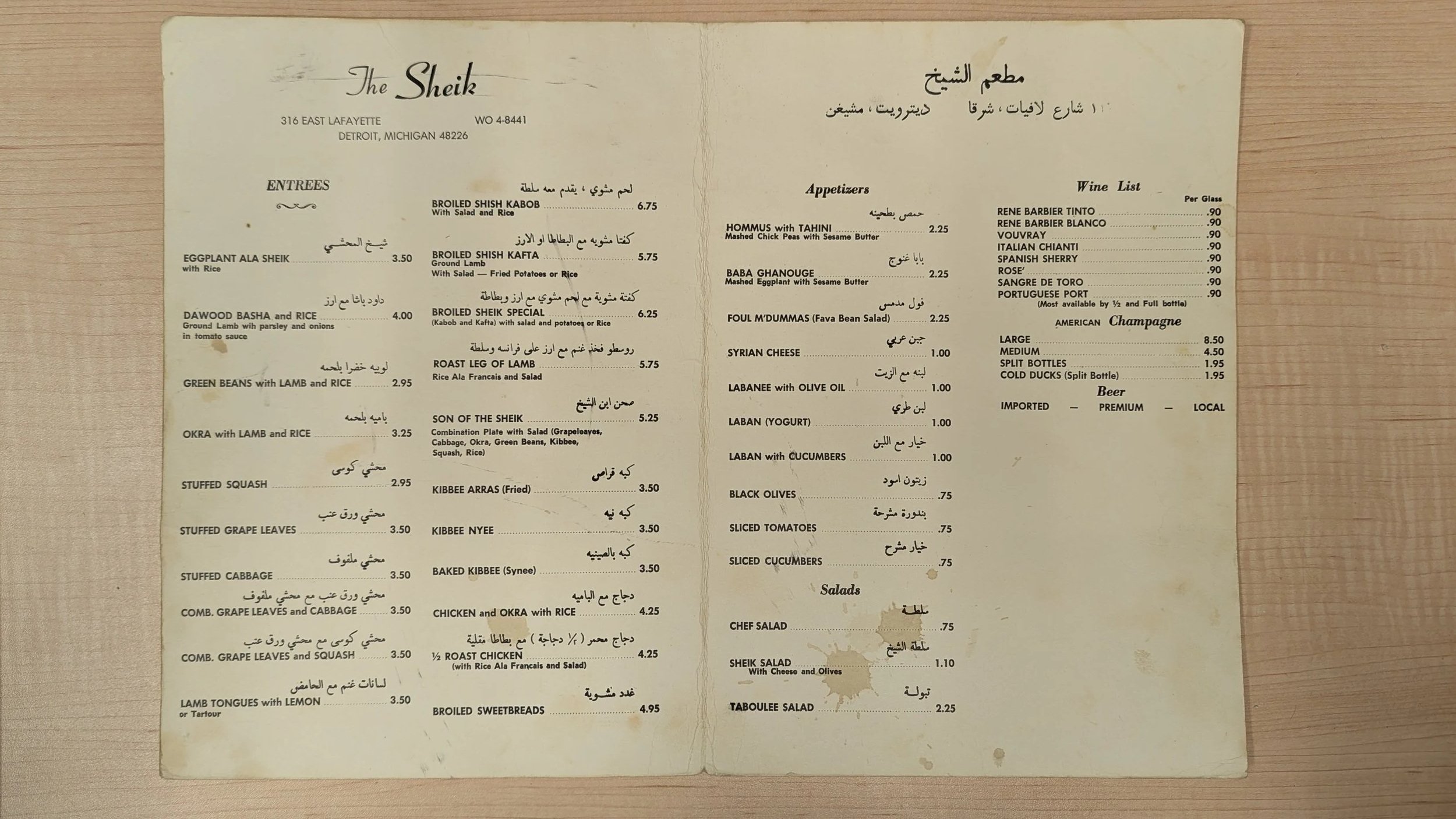
The interior menu - in English and Arabic - features traditional Levatine dishes as well as wine and beer. Courtesy of the Arab American National Museum
The Sheik restaurant was a prime ethnic destination for New Yorkers, as it was reviewed or mentioned by dozens of publications throughout its existence. One 1962 guidebook, New York on Five Dollars a Day, said of The Shiek, “Your grandparents will probably remember this exotic Middle Eastern restaurant from the days when it was known as ‘Kirdahy Brothers’ and located on the lower East Side” (157). This review was typical of the manner in which the restaurant was portrayed by non-Arab Americans:
Exotic, unusual, but inviting.
The Kirdahy brothers’ success spurred other Arab American restaurateurs to name their establishments after popular Hollywood depictions of the Arab world. Between 1920 and 1970 there were Sheik-themed restaurants stretching across the country from New York City to Chicago and throughout southern California (You can read a much more in-depth discussion of this phenomenon in my essay “Consuming Orientalism: Public Foodways of Arab American Christians”.)
By 1923 there was a Sheik Café managed by Abraham Abood at 421 Jefferson Ave., according to the Detroit city directory. In the late 1930s, a Palestinian immigrant named Toufik Barham took over ownership of the Sheik Café, then located at 316 E. Lafayette, just outside of Greektown (for more on Barham see Kristin Dickinson’s portrait in her project “The Middle East in Metro Detroit”.) It was this location that would come to represent Lebanese and Arab cuisine to Detroiters into the 1980s, after Lebanese American Fred Ghanem took over operations in the in the 1940s. The Ghanem family owned and operated The Sheik (café was dropped from the name) until it was closed due to fire damage in 1988.
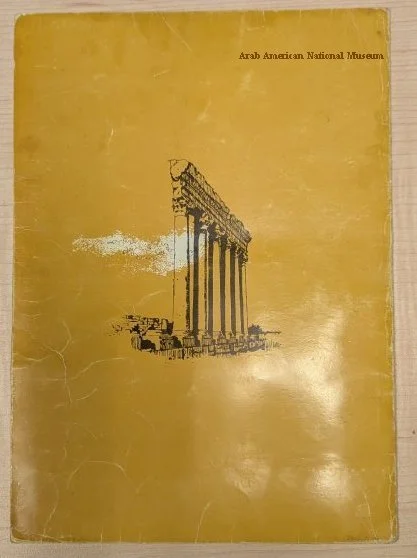
The famous Detroit eatery is tied directly to the 1921 silent film of the same name.
Early Arab American entrepreneurs exposed a niche in the increasingly anti-immigrant American landscape: Even as the Hollywood productions they were emulating were steeped in stereotypes of an Arabia that never existed, and even as immigration from the Middle East was all-but-cutoff by 1924, Arab American restaurateurs capitalized on their perceived exoticness and sold the general public a taste of the Arabian Nights in their own backyards.